

Let’s face it — chasing unpaid invoices is right up there with assembling IKEA furniture without instructions or queuing behind someone who’s never used a self-checkout. If you’re tired of doing the awkward “just circling back” dance, it might be time to give your invoicing game a glow-up. Here’s how to write an invoice that doesn’t get ignored, forgotten, or eaten by someone’s spam folder — and gets you paid, on time (without morphing into an unpaid debt collector).
The non-negotiables: how to write an Invoice that’s actually useful
Yes, you can design your invoice to look as snazzy as a Soho boutique menu — but if it’s missing the essentials, it’s just fancy paper (or pixels). Here’s your must-have list:
- Your business name & contact info (bonus points for a logo)
- Client’s name and contact details (triple check spelling — no one likes being called “Jonh”)
- Unique invoice number (not “Invoice #1″… again)
- Clear description of services/products (ditch the vague stuff — no one knows what “strategy magic” means)
- The total amount owed (don’t make them do maths — ever)
- Due date (not “ASAP” — we’ll get to that)
Keep it clean, clear, and devoid of mystery.
Not sure if your invoice hits all the right notes?
We can help you whip it into shape — no spreadsheets, no stress. At Clear Coast Solutions, we know exactly how to write an invoice that gets paid (and makes you look like the pro you are).
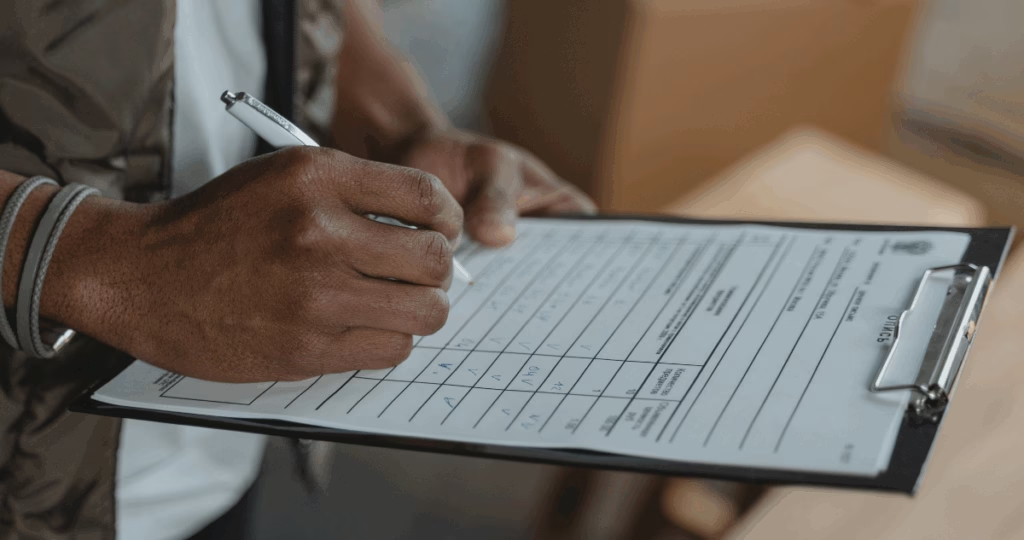
Need help making invoices that actually get paid? Let Clear Coast Solutions sort it.
Payment terms that don’t invite excuses
“Payment due in 14 days” is lovely in theory. But without clarity, it translates to “Pay me whenever Mercury is in retrograde.”
Instead:
- Use specific dates. (“Due: 17 June 2025” > “within 14 days”)
- Add a friendly late fee note. (“Late payments incur a 5% fee after 3 days” — it’s not rude, it’s business.)
- Be upfront about preferred payment methods. (Bank transfer? Wise? Carrier pigeon?)
And for the love of spreadsheets, never use vague phrases like “upon receipt” unless you want your invoice to sit unopened until the next solar eclipse.
The foolproof, not-at-all-awkward follow-up strategy
Chasing payment doesn’t have to feel like chasing a date who ghosted you. Try this smooth(ish) sequence:
- 1 day before due date: A friendly nudge — “Just a quick heads-up your invoice is due tomorrow. Let me know if you need anything from me!”
- 2 days after due date: “Hey! Just checking in — it looks like the invoice might’ve slipped through the cracks. Happens to the best of us. Here it is again for ease.”
- 7+ days late: Time to gently turn up the heat — “Just a reminder this invoice is now overdue. If you’ve already paid, ignore me entirely (and I’ll owe you a coffee). Otherwise, here’s the link again.”
Keep it light, polite, and slightly cheeky — it beats passive-aggressive ALL CAPS.
Automate it and forget it (well, sort of)
Once you know how to write an invoice properly, the next power move is automation. Because no one has time to manually create, send, and track invoices every month — especially when there’s actual work (or seaside cocktails) to be done.
Tools like Xero, QuickBooks, and FreeAgent let you:
- Auto-generate recurring invoices
- Set up reminder emails (no guilt, no effort)
- Track who’s paid (and who’s pretending they never saw it)
It’s like having an admin assistant who doesn’t steal your lunch from the office fridge.
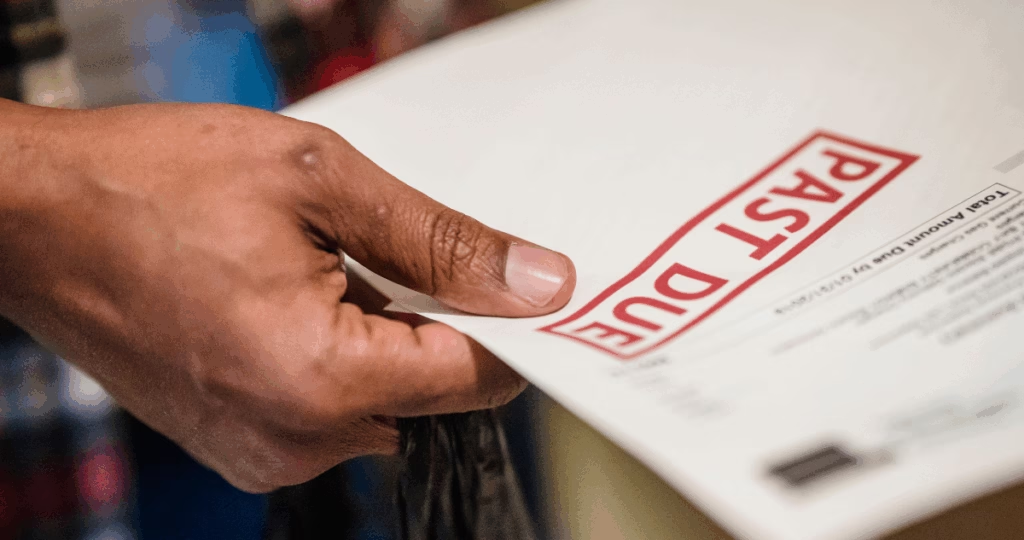
You’re not a charity
You’re running a business, not giving out free samples of your time and talent. A proper invoice — clear, confident, and automated — is a subtle way of saying: “I value my work. And you should too.”
Need help setting up invoicing systems that work while you dive (literally or figuratively)? That’s our jam. At Clear Coast Solutions, we love turning chaos into “wow, that was easy.”
FAQ: Writing Invoices That Get Paid on Time
A useful invoice includes:
– Your business name, contact info, and logo
– Client’s name and contact details
– A unique invoice number
– Clear description of services or products
– Total amount owed
– A specific due date
Keeping it clean and clear avoids confusion and speeds up payment.
Be specific. Include an exact due date, preferred payment methods, and a polite late fee notice if necessary. Avoid vague terms like “upon receipt,” which can delay payment.
Use a friendly, structured approach:
– 1 day before due date: gentle reminder
– 2 days after due date: polite nudge
– 7+ days late: firmer but courteous reminder
Keeping the tone light and professional helps maintain good client relationships.
Yes. Tools like Xero, QuickBooks, and FreeAgent allow you to auto-generate recurring invoices, send reminder emails, and track payments. Automation saves time and reduces manual follow-ups.
A clear, confident invoice shows clients you value your work and expect timely payment. It reduces stress, avoids cash-flow issues, and ensures your business runs efficiently without turning you into a debt collector.




Leave a Reply